Finley Schulz · 25 September 2026
How Enforcement of Mental Health Parity Varies Across U.S. States
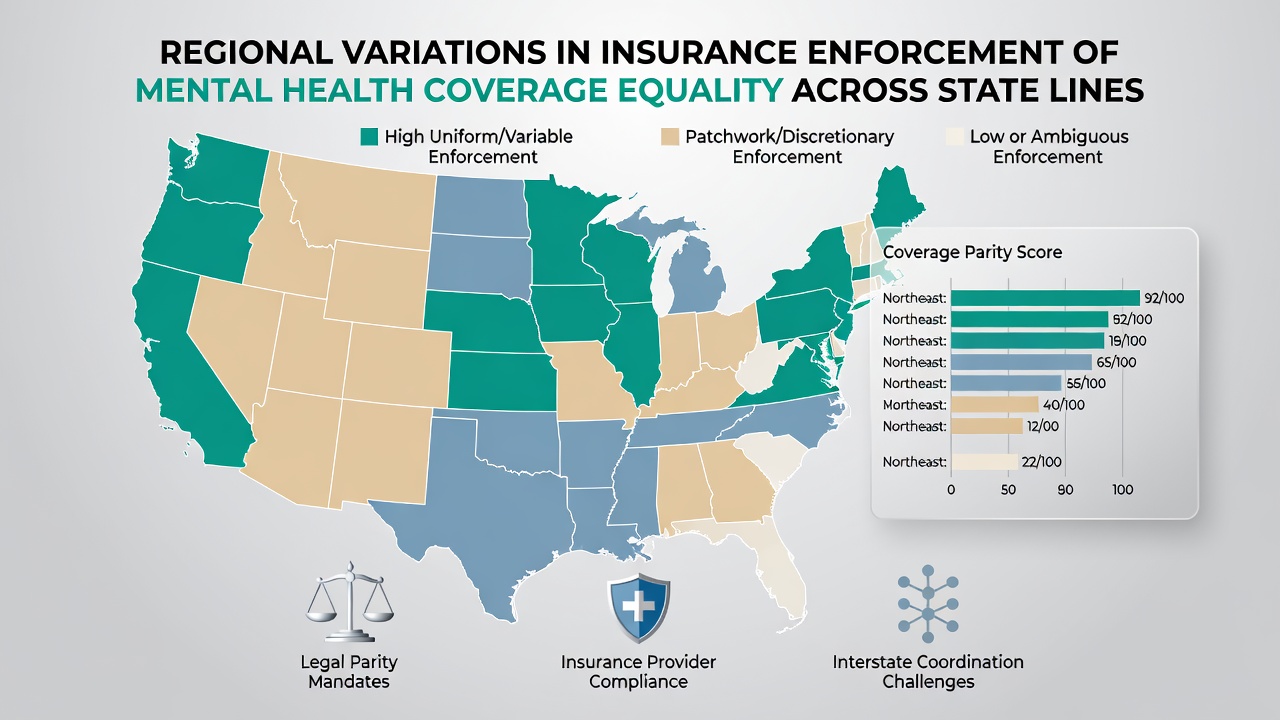
Regional differences in how states enforce mental health coverage requirements create a patchwork of protections for consumers who move or work across state lines, and the federal Mental Health Parity and Addiction Equity Act sets baseline standards while state agencies handle day-to-day oversight and compliance actions. Researchers have tracked these variations through annual reports that compare complaint volumes, audit frequencies, and penalty structures in states with strong versus limited resources.
Federal Baseline and State Implementation
The Mental Health Parity and Addiction Equity Act requires insurers to cover mental health and substance use services at levels comparable to medical and surgical benefits, yet states decide how aggressively they investigate violations and apply remedies when plans fall short. Some jurisdictions maintain dedicated parity enforcement teams that review thousands of claims each year, whereas others rely on general insurance department staff who handle parity issues alongside other regulatory matters. Data from government sources indicate that states with specialized units close cases faster and secure larger corrective payments for consumers.
Contrasts Between Coastal and Interior States
California and New York maintain detailed reporting mandates that require insurers to submit quantitative treatment limitation analyses on a regular schedule, and these requirements allow regulators to spot patterns of noncompliance before consumers file complaints. In contrast, several Midwest and Mountain states use complaint-driven systems that trigger reviews only after multiple individuals report the same issue, which can delay detection of systemic problems in employer-sponsored plans that cross borders. Observers note that larger insurers operating in multiple states often adjust their internal policies to meet the strictest standard in any single jurisdiction to avoid separate enforcement actions.
Cross-Border Challenges for Employers and Plans
Self-funded employer plans governed by ERISA face additional complexity when employees reside in states with differing enforcement priorities, and regulators in one state may lack authority to compel changes in a plan administered from another location. Studies compiled by research institutions show that employees in states with active enforcement offices receive more frequent approvals for out-of-network mental health providers compared with residents of states that conduct fewer audits. Insurance commissioners in high-enforcement states have formed informal working groups to share investigative techniques, yet formal reciprocity agreements remain limited.
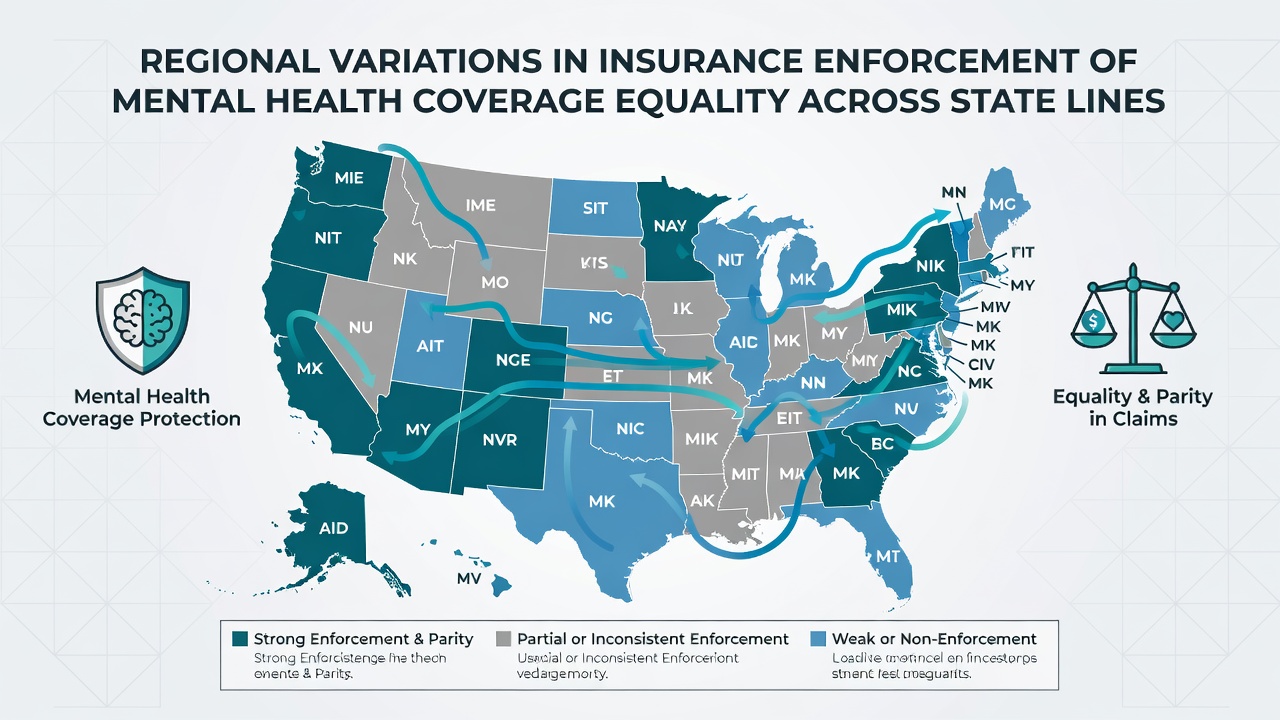
September 2026 brought updated federal guidance that clarified how states should coordinate when a single insurer serves residents in multiple jurisdictions, and early implementation data suggest that states adopting the new coordination protocols have reduced duplicative audits. Academic researchers tracking these changes found measurable increases in approved mental health claims in states that previously lagged in enforcement activity.
Emerging Patterns in Southern and Western States
Texas and Florida have expanded their use of market conduct examinations that include parity reviews, and these examinations have uncovered instances where prior authorization requirements differed significantly between mental health and medical benefits. Arizona and Colorado have published public dashboards that display enforcement metrics such as the number of corrective action plans issued each quarter, giving consumers and employers clearer information about plan performance. These transparency tools differ from approaches in states that keep enforcement outcomes confidential unless litigation occurs.
Conclusion
State-level choices about staffing, reporting, and penalty structures continue to shape how effectively mental health parity laws protect consumers who live or work near state borders, and ongoing federal coordination efforts aim to reduce gaps without replacing state authority. Figures from regulatory agencies and independent analyses show that enforcement intensity remains uneven, yet incremental alignment through shared data and updated guidance is narrowing some of the most pronounced regional differences.