Paul Meier · 23 October 2026
Federal Support for Coastal Erosion Control: Grant Allocations and Project Implementation Across Regions
Federal agencies have directed substantial resources toward coastal erosion control through targeted grant programs that distribute funds to states and localities based on vulnerability assessments and project readiness, with allocations reflecting regional differences in shoreline length, storm frequency, and population density. Data from multiple agencies show that these initiatives combine direct federal appropriations with matching requirements that encourage local investment, while implementation timelines often span several years from approval to completion.
Grant Allocation Mechanisms and Funding Sources
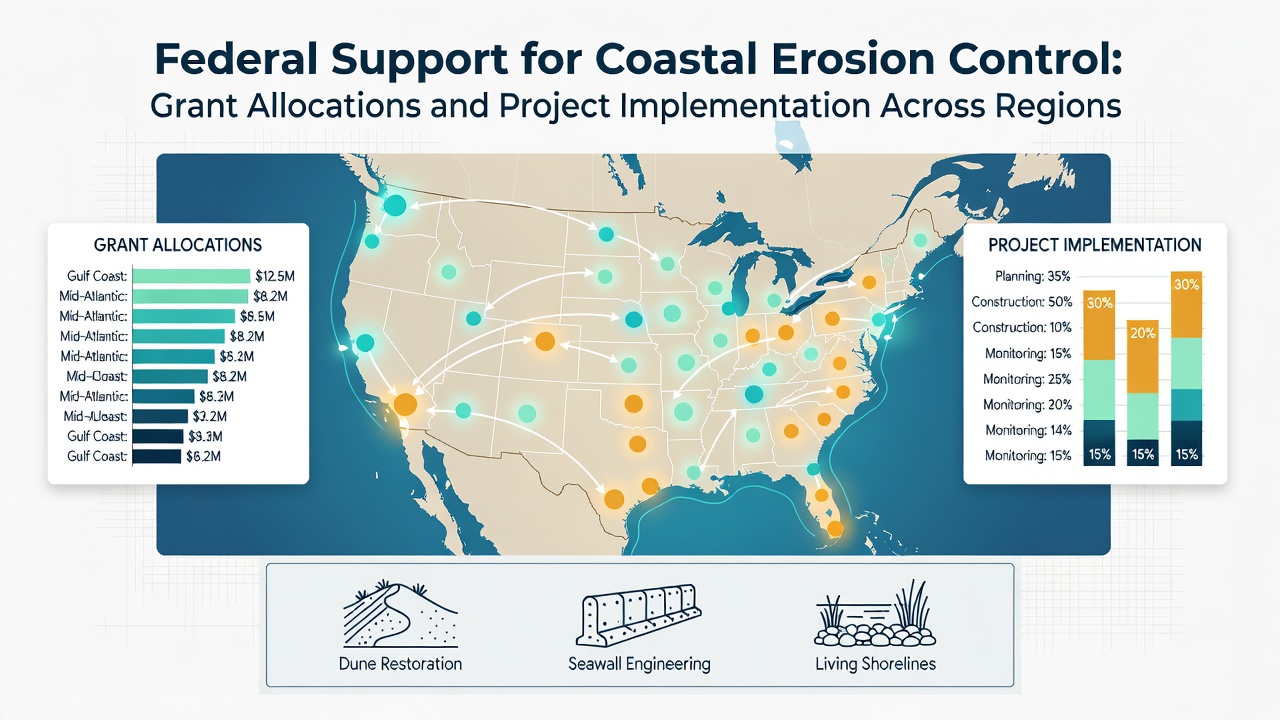
Programs administered through the National Oceanic and Atmospheric Administration and the U.S. Army Corps of Engineers rely on formulas that weigh erosion rates against economic exposure, yet observers note that supplemental appropriations frequently adjust these baselines during periods of heightened storm activity. In October 2026, updated disbursement records indicated that the Northeast and Mid-Atlantic states received the largest share of recent cycles because of repeated nor'easter impacts and dense coastal development, whereas Gulf Coast recipients secured additional support tied to hurricane recovery packages. Those who've reviewed the distribution patterns see clear emphasis on nature-based solutions such as dune restoration and living shorelines alongside traditional hard structures like seawalls.
Researchers at coastal universities have documented how grant applications now require detailed monitoring plans that track sediment movement and habitat response, which in turn influences future funding eligibility. This approach connects project outcomes directly to allocation decisions, and data indicate that regions demonstrating measurable reductions in erosion rates have maintained steadier funding streams across successive budget periods.
Regional Implementation Patterns
Along the Pacific coast, projects have focused on bluff stabilization and sediment management near ports and urban centers, with implementation often coordinated through multi-agency partnerships that include state coastal commissions. In contrast, Southeast and Gulf efforts have prioritized barrier island restoration and marsh creation because these features buffer both residential areas and critical energy infrastructure. Observers note that timing differences appear across regions because permitting processes and environmental reviews vary in complexity and duration.
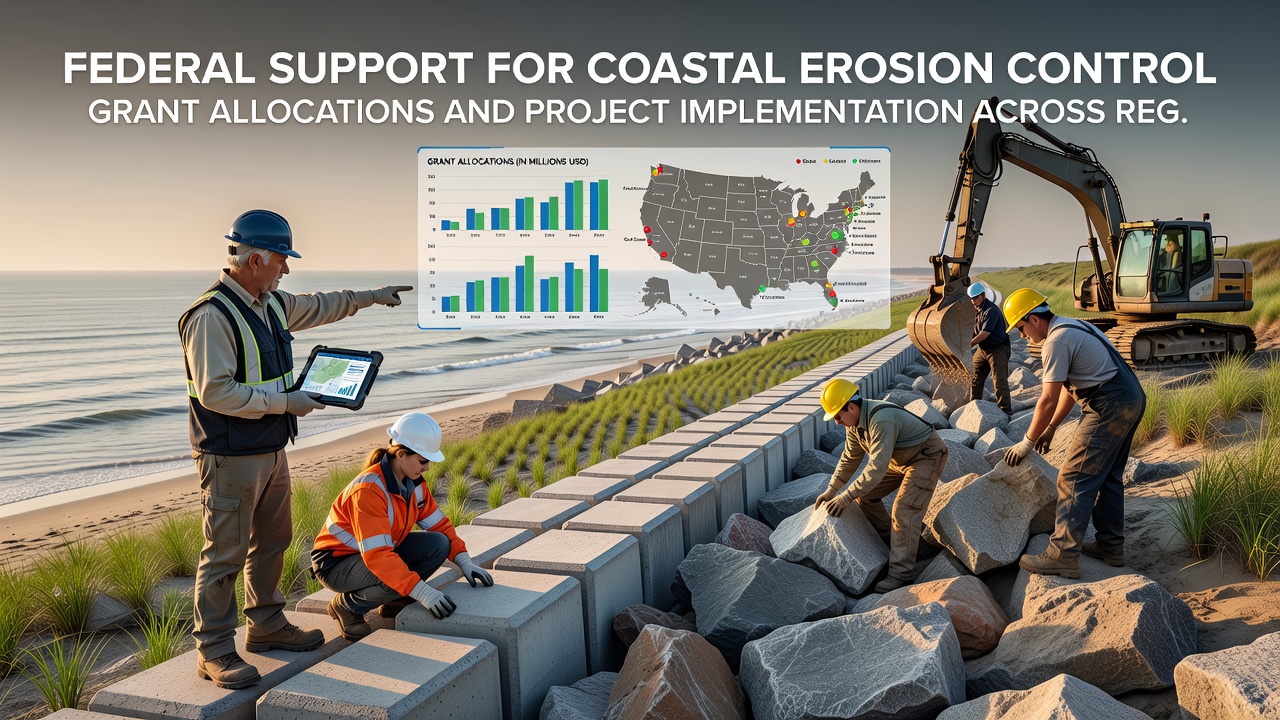
Great Lakes shorelines present a distinct set of challenges where water level fluctuations drive erosion, and federal grants have supported both structural and non-structural measures including setback ordinances and vegetation management. Those who've studied cross-regional comparisons find that successful projects typically integrate community input early, which reduces delays once construction begins and improves long-term maintenance commitments from local governments.
Project Monitoring and Outcome Evaluation
Evaluation frameworks attached to these grants require periodic reporting on physical changes to the shoreline as well as economic and ecological metrics, and agencies have begun consolidating this information into national databases that support comparative analysis. Evidence shows that projects incorporating adaptive management components have adjusted designs mid-stream when monitoring revealed unexpected sediment loss or habitat shifts. According to NOAA coastal program summaries, such flexibility has helped maintain project viability across varying climate conditions.
Additional insights emerge from studies conducted by institutions outside the United States, including work from Australian coastal research centers that examines similar grant structures and their effects on community resilience. These international comparisons highlight common implementation hurdles such as rising material costs and workforce shortages, while also pointing to effective practices around stakeholder coordination that U.S. programs have started to adopt.
Challenges in Cross-Regional Coordination
Although federal guidelines establish consistent eligibility criteria, actual project execution depends heavily on state-level capacity for technical review and contractor oversight. Regions with established coastal management offices have moved projects from planning to construction more rapidly, whereas areas newer to large-scale erosion control have encountered longer lead times. What's interesting is how interagency task forces have begun addressing these disparities by sharing engineering templates and procurement strategies across state lines.
Budget cycles and congressional appropriations introduce further variability, since multi-year projects must compete for continued funding against emerging priorities elsewhere. Data from agency reports reveal that contingency provisions built into some grants have allowed work to continue during temporary shortfalls, yet delays remain common when matching funds from local sources fall short of projections.
Conclusion
Federal support for coastal erosion control continues to evolve through refined allocation formulas, expanded monitoring requirements, and greater attention to regional differences in implementation capacity. Records through October 2026 show sustained investment across multiple coastal zones, with outcomes increasingly tied to measurable performance indicators. As agencies refine these programs, the emphasis remains on connecting grant decisions to demonstrated results in shoreline stabilization and risk reduction.