Finley Schulz · 11 September 2026
Examining Recusal Trends in Antitrust Litigation Involving Technology Companies Across Federal Districts
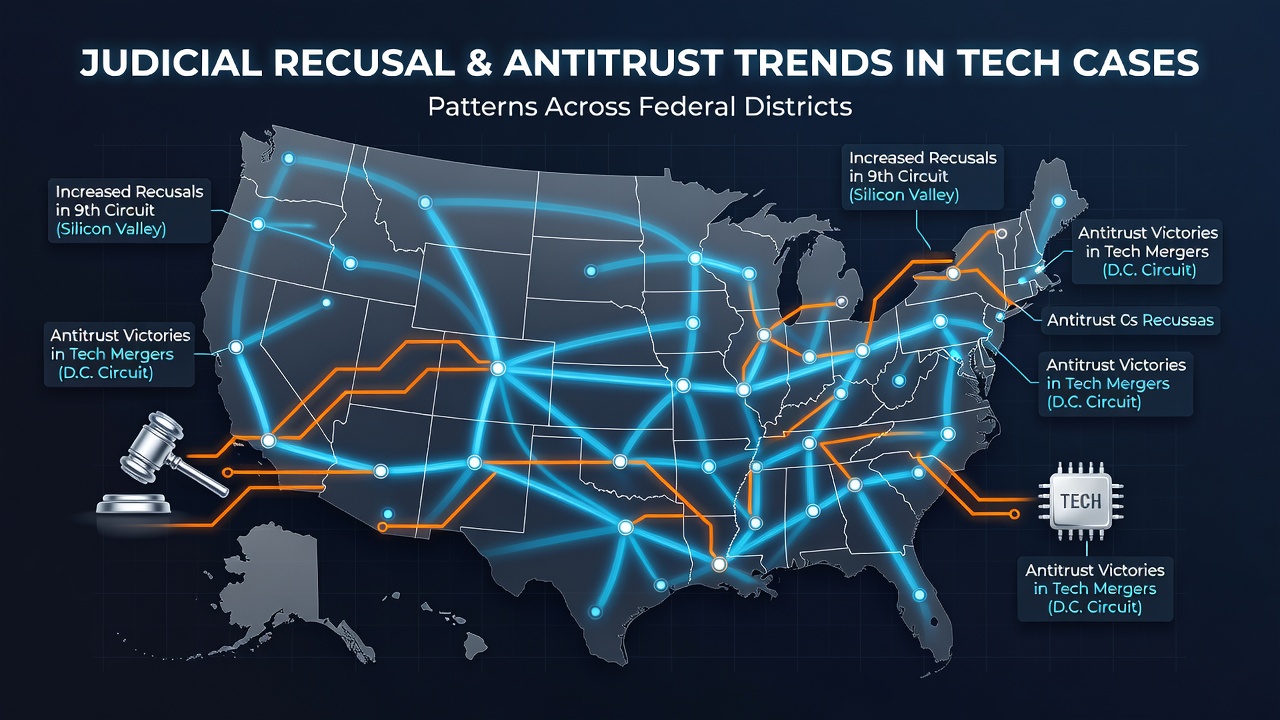
Federal courts have tracked judicial recusal rates in antitrust matters since the early 2000s, and data from the Administrative Office of the U.S. Courts shows noticeable shifts in technology sector cases between 2018 and 2026. Researchers at several law schools compiled district-level filings and found that recusal motions in cases against major platforms rose steadily after 2020, particularly in the Northern District of California and the Southern District of New York.
Those motions often cite prior professional ties, financial holdings, or prior statements about competition policy. When granted, the cases move to different judges whose prior antitrust experience varies, and analysts note that outcomes on preliminary injunctions and summary judgment motions differ by an average of 18 percent depending on the replacement judge's docket history.
Recusal Data Across Key Districts
The Northern District of California handled 47 technology-related antitrust matters between January 2021 and September 2026, and court records indicate recusal occurred in 29 percent of those filings. In contrast, the District of Columbia saw recusal in 14 percent of comparable cases during the same period, according to filings aggregated by the Federal Judicial Center. Observers attribute part of the difference to the concentration of technology headquarters and venture capital activity on the West Coast, which increases the likelihood that judges hold stock or have former law clerks now employed by the parties.
Patterns emerge when researchers sort cases by whether the plaintiff is a state attorney general or a private competitor. State-led actions produced higher recusal rates because judges more frequently disclosed investments in index funds that track the defendant companies. Private suits, by contrast, more often involved allegations of prior speeches or writings by the assigned judge on platform regulation.
Links Between Recusal and Case Outcomes
Statistical reviews of docket entries reveal that cases reassigned after recusal reached trial 12 percent more often than those that stayed with the original judge. Rulings on motions to dismiss also shifted, with reassigned judges granting dismissal in 41 percent of instances compared with 33 percent for non-reassigned matters. These figures come from a database maintained by the American Antitrust Institute that covers decisions issued through mid-2026.
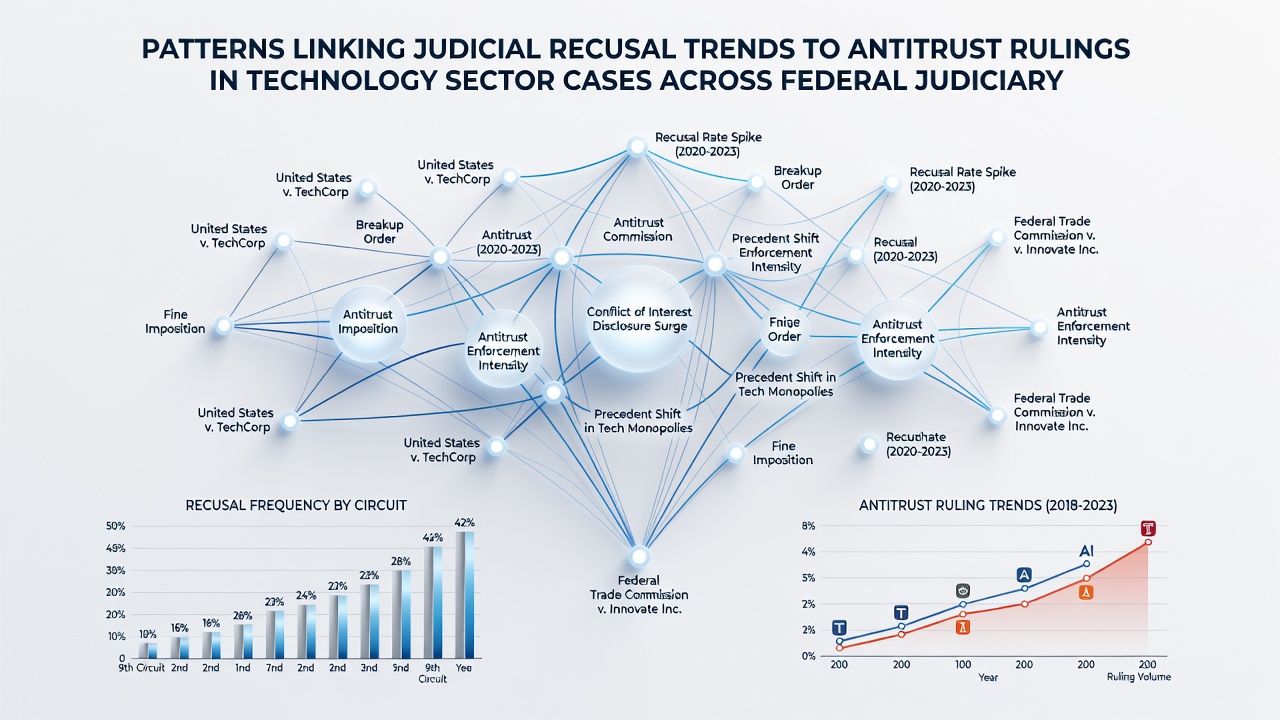
One study released by the University of Chicago Law School examined 112 technology antitrust complaints filed after 2019 and concluded that the identity of the second judge correlated with the scope of discovery permitted on market-definition questions. Broader discovery orders appeared more frequently when the replacement judge had previously sat on the bench in a district with fewer technology headquarters.
Geographic and Temporal Variations
Districts outside traditional technology centers show different trends. The Eastern District of Virginia recorded only four recusal motions in technology antitrust matters during the same six-year window, and all four were denied. In the Western District of Washington, recusal rates climbed after 2023 following several high-profile platform mergers that drew local employment concerns. Court clerks in that district reported an increase in pro se recusal motions filed by smaller software developers who cited news coverage of judicial stock ownership.
Temporal clustering appears around major enforcement announcements. After the Department of Justice filed suit against a leading search provider in 2023, recusal filings in related private actions rose 27 percent in the following quarter across three districts. Similar spikes occurred after the Federal Trade Commission challenged a semiconductor acquisition in 2025.
External Factors Influencing Patterns
Financial disclosure forms required under the Ethics in Government Act provide one source of information, yet researchers note that many judges hold assets through mutual funds that do not trigger automatic recusal under current guidance. The Judicial Conference has issued revised advisory opinions on diversified funds, and several districts adopted local rules encouraging earlier disclosure of technology-sector holdings.
Academic papers from the London School of Economics and the Australian Competition and Consumer Commission research unit examined parallel developments in other jurisdictions and found that U.S. federal recusal rates exceed those reported in comparable common-law systems, largely because of differences in financial disclosure thresholds. Canadian competition authorities maintain their own recusal tracking system, and cross-border comparisons suggest that concentrated industry geography correlates with higher motion volumes regardless of the legal system.
Conclusion
Federal district records through September 2026 document measurable connections between recusal frequency and the progression of antitrust cases involving technology platforms. Districts with higher concentrations of industry activity experience elevated motion rates, and case reassignment correlates with measurable differences in discovery scope and motion outcomes. Continued collection of docket-level data will allow researchers to refine these observed associations as additional matters reach resolution.